Raw Liubao Deep Dive: What is It? What’s to Love?
The Liubao many know and love today has little to do with the tea that made the damp little mountain township of the same name famous in the first place. The viscous dark red-brown tea soup and mellow sticky rice flavor profile you may know is all result of a double-steaming and moisture-controlled piling techniques that were developed between 1954 and 1965. Like the Ripe Puer that these innovations inspired, pilled factory-made tea can safely be classified as a dark tea. Yet, the spectrum of greener household produced teas, nongjiacha, that came before it, has little to do with this. Whereas the “modern technique” draws together fresh leaves in million of tons and makes them into a narrow list of balanced finished products on fixed recipes, the “traditional technique(s)” can make from just a few acres of green leaf a range finished tea that varies widely in shape, flavor, and aroma. Like with “raw” Puer, sweetness and complexity often comes bundled with a certain amount of sharpness and astringency. To be sure, some of these traditionally made teas are also completely undrinkable.
There was however, something in these teas that won the adoration of Cantonese people and their descendants in South-East Asia. When Chinese rickshaw pullers in British Singapore, tin miners in Malaysia, rice merchants in French-ruled Saigon, or Mao on his 1924 visit to Guangdong sipped on “Liubao tea,”they were all drinking what would now be called nongjiacha. It is our job here to explore that something.


(Wuzhou Morning Tea Market & Tea Street Photographer On a Similar Mission)
Material Variety
Although Guangxi’s Supply Co-operative System and Land Reclamation Group deserve celebration for processing and marketing a massive quantity of tea from farmers in Wuzhou, neighboring Hengxian, and other parts of the Province, something lost in this process is variety. It is their job to make sure you taste the same recipe, the aging environment, and nothing else in every given batch. In the countless garage operations that enliven mountain villages along Province Road G355, you can find tea leaves of any season and level of maturity, as well as the same plants’ flowers, twigs, and seeds. In the warm and muggy climate, tea can be and is still s picked in phases as early as March and late as November or even December.
When we arrived in Liubao Village, one day before Winter Equinox, Auntie Chen in Liubao Village had still not brought in the final late-season Laochapo that was drying on her roof. Around 10 minutes by car up into the core growing region, you can find the Heishi Factory and all the facilities appropriate for a fledgling tea tourism destination. They sell commemorative sample sets of Liubao tea for pick seasons from Sheqian and Qingming in March to Shuangjiang and Lidong in October and November. A further 20 minutes up the road and few hundred meters up into the mountains, you can reach Gongping Village. Here, the Wei, Deng, and other clans have filled attics and crawlspaces with every tender morsel of tea that can be picked when the high elevation allows new growth. Most of the bud-heavy Spring tea is left to age loose or semi-loose in baskets, while some larger leaf laochapo are pressed into rectangular bricks. There is also some quantity of Yunnan-style cakes using tea of all seasons that is pressed on the Township “tea street,” but all such teas, according to Master Wei, are gift tea products bound for Guangzhou display shelves. Most liubao tea is loose from start to finish.


(Winter Laochapo; Freshly Pressed Tea Cakes at Liubao Tea Street )
Although the terminology is different, there is a familiar seasonal pattern in the taste and appearance of the picks throughout a given year. Like some green tea and Puers, those earliest most bud heavy Sheqian and Mingqian picks, sometimes called Chagu, can be miserably bitter and astringent when fresh, but also have the potential to deliver frutiness, florality, and quintessentially Spring strength you can feel from head to toe. As with white tea, the greater leaf maturity associated with later picks called Zhongcha and Erbaicha can be more mellowly sweet and stem-heavy. Finally, the Laochapo made from the most mature new-growth leaves gives a uniquely vegetal, almost cucumber taste when fresh.


(Yellow Bud, Dayezhong Hybrid, "Purple" Bud in Gongping Village)
Even within the Liubao Township, there is also a massive variety between tea bushes themselves. With an elevation range from over 900 meters to just under 90 meters above sea level, the township offers both old growth trees and freshly planted bushes interspersed with patches of bananas, papayas, tea oil trees, rice, bamboo, and other crops. Older and more wild bushes here offer the same mix of sweet, mellow, or woody flavors they do everywhere. Of the heirloom seed-grown yuanzhong, some farmers have also intentionally selected out plots of yellow bud and purple bud. Supposedly, the latter is harsher but with unique aging potential. Beyond this, there is has been an extra dimension of complexity with the introduction of Fuding Dabai and Yunnan Large Leaf Varietals in the 1970’s. Although most of these experimental plots where abandoned in the 1990’s due to their low yield, some large leaf-yuanzhong hybrids still exist. These bushes are more disease prone than heirloom bushes, but have that Assamica taste that some Hong Kong customers like, and more than a few now associate with Liubao. Indeed, outside of Liubao Township there is a large quantity of both both modern and traditional “Liubao” produced in Yunnan and elsewhere in South East Asia. At a Wuzhou morning street market, one can find these teas along with equally fake Laobanzhang or Bingdao for no more than 50 CNY a pop.

(Very Questionable Aged Liubao and Puer Cakes at Wuzhou Morning Market)
Processing and Aging
What people like in Liubao comes with time. For the past few centuries, there were no shortage of wok-fried and sun-dried green teas in China. In essence, a lot of the tea traditionally made in Liubao Township starts out just like Chunjian in Yunnan or Shaiqing in Chibi. Fried in a wok, then kneaded by hand and dried directly under the sun or over an oven, the simplest Liubao tea is ready to drink. This is indeed what many older farmers in the area remember drinking as a kid - served up in bowls at home or thermoses while working in the hills. At this stage, Liubao tea is a rough, refreshing, low-fragrance kind of brew. What almost certainly made Liubao teas special to past generations is what can happen next. Through 1-2 days of piling, the tea can go through an additional dry-yellowing step. A round of steaming (or direct scolding) before being being packed into baskets still wet seems to then kickstart a microbial fermentation process. Within just two years, such tea can be thoroughly penetrated by dozens of yellow and while molds, which are almost never toxic to humans. Many baskets can also become home to a species of particularly tea-loving moth, which eats all the tender parts of leaves, leaving behind fine black grains of unusually expensive excrement. As the moths and microbes do their work, a lot of what makes the tea a normal astringent Shaiqing Maocha in the first place is broken down - and it becomes a dark tea in much the same way that Tianjian in Hunan or Ancha in Anhui does. Zhuang Wanfang speculated in his 1979 introduction to Liubao that traditional Liubao tea was the inspiration for these and all other dark tea, but I am personally not convinced.

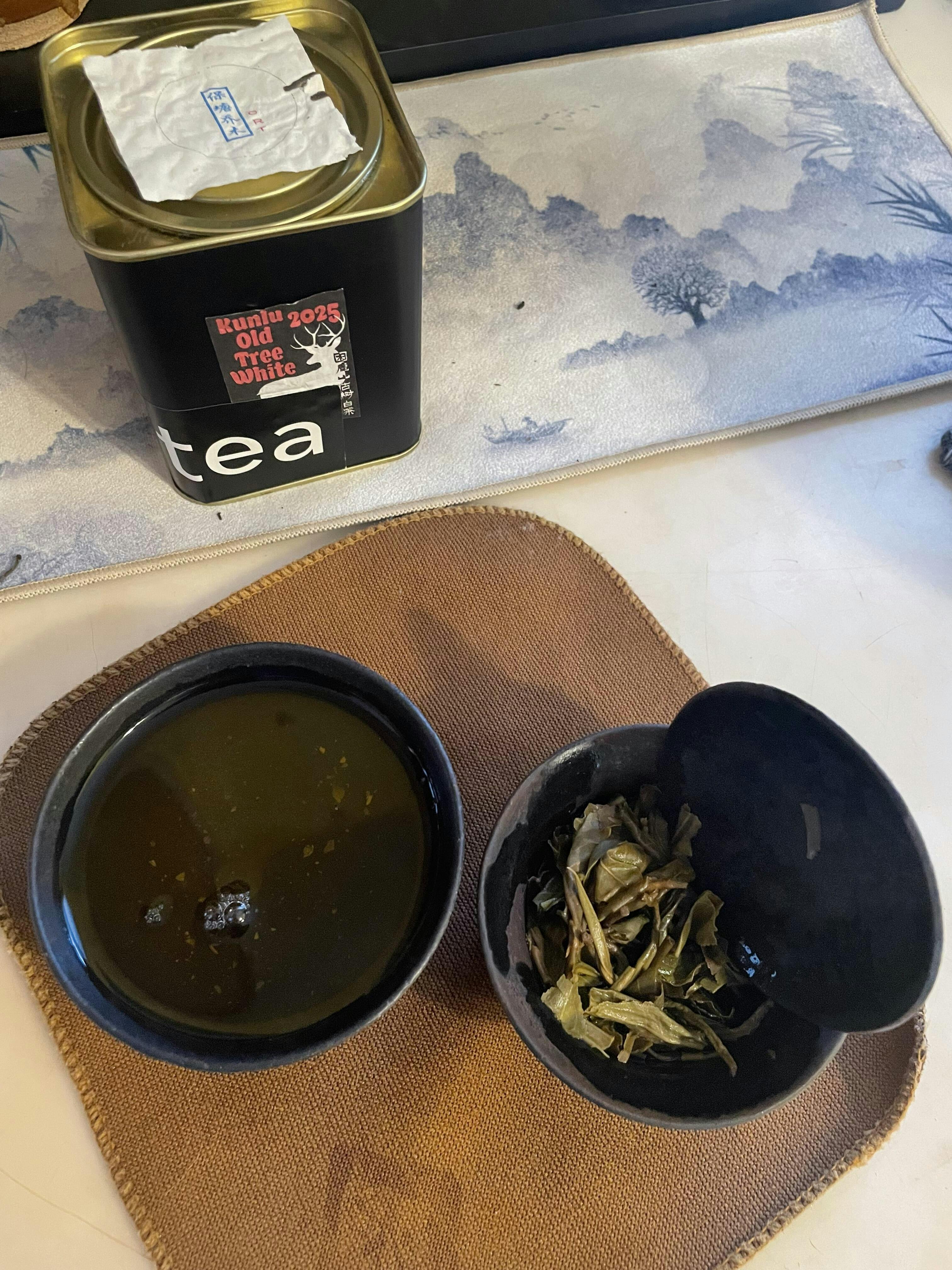
(Fresh Laochapo Brewed up in Bowl)
Whether or not it is the ancestor of all dark teas, as traditionally made Liubao teas “age” - all the famous flavor profiles come into being. The most decomposed, theabrownin-rich teas are associated with the term “chenxiang” or Old Aroma. Laochapo seemed to develop into a more mellow but Medicinal Aroma, while still others will settle into a smoky “Yao Aroma” profile that to me most resembles Anhui’s Ancha. This flavor profile is associated with the Yao Minority group’s production habits in certain villages like Tangping. Other particularly fungus rich teas that develop a flavor similar to Hunan’s Fuzhuan are also sometimes now called “Junxiang” or “Fungal Aroma.” Finally, most famous of all perhaps, the teas that start off more linalool-rich can develop into a pleasantly sweet, somewhat sharp and smoky Binglang Xiang AKA Betel-nut Aroma. Other flavor profiles that are less common or redundant include Flower Aroma, Ginseng Aroma, Pine Smoke Aroma, Woody Aroma, and Honey Aroma. I would contend also that the syrupy sweet Jujube or Sticky Rice aromas associated with the modern production techniques are also seldom found in traditionally produced teas.
There flavor profile terms are not completely arbitrary. Guangxi TCM University’s Zhang Qiang and team have found that teas associated with the betel flavor profile have around 20% more polyphenol content than Old Aroma teas. This gap remains at the 3, 5, and 10 aging mark. This suggests that there is something objective and physically different about these two flavor profiels. Xu Hao and team’s summary all of extant of Chinese research suggests that the relative content of floral and fruity compounds such as linalool and pinene. Cedrol in particular, which we associate with cedar or juniper, seems to play a major role in forming this betel nut flavor. More interestingly, it is naphthalene, associated with the odor of coal tar, but also produced by some plant fungi, that gives that smoky element so fundamental to many Liubao flavor profiles.


(Auntie Chen's Laochapo & Traditional Basket Storage in Gongping Village)
How all these different flavor profiles form remains a complete mystery to some of the producers we spoke with. Auntie Chen in Liubao Village seals her tea into plastic sacks, loads them up onto a shelf, and then patiently waits for people like us to come knocking. She has has heard of “Betel Nut Aroma” but has not experienced it herself. More traditional, covered but not quite air-tight baskets were the norm in Liubao tea storage, and they are certainly still used by many households. The tea in these baskets, as one grower remembers, would become each Spring undrinkably damp and even fowl, before becoming more pleasant again with the Summer heat. Master Wei’s father, a lifelong tea farmer, remembers spreading out the moldy tea that would accumulate every few years as fertilizer in the fields. Although locals liked tea that had rested and aged, older moldy teas were treated as spoiled and disposed of accordingly. Since his son worked in a Wuzhou tea factory, Grandpa Wei has now values these older teas, and can recognize the main flavor profiles requested by visiting buyers. He did not however have an intended aroma profile for the tea that he and his wife made two decades ago.
Younger producers like Master Wei and Master Liang make more of an effort to produce certain flavor profiles. Wei separates fresh leaves, cultivar, pick time, and even bud color. Tasting the fresh tea, he has a sense of the direction a tea is going to develop with age. Master Liang goes a step further, using a variety of different drying techniques. Sun-drying for Laochapo, electric oven drying for new tea to be consumed fresh, and charcoal roasting for fruity and cocoa flavors that can mellow into more premium aged tea. Neither the Wei, Chen, nor Liang households we spoke with control the temperature or moisture level of the drying environment. Aging is still in art better practiced by outside collectors and larger factories. In contrast, the old Sanhe Factory makes a point of their carefully-monitored stone cellar and wood-lined storing rooms, that have developed a unique, irreplaceable micro-environment with specific microbe species present. At least they say so on their museum tour.
What’s To Love?
If you have heard of Liubao before, you have probably already learned that the printed age on the bag is not to be trusted. Almost all the genuine Pre-2000 Liubao tea was bought up by Hong Kong and Malaysia-based tea traders. Tea exports from Wuzhou peaked in 2005, and have declined ever since. On the one hand, a lot of the oldest material was gone - as a decline of demand in the 1990’s made a lot farmers eager to part with whatever aged tea they could find stored. On the other hand, a sufficient supply of aged and fake Liubao is already available for the purposes of these same traders and the traditional consumer base in ASEAN counties. There has been an explosion in domestic production and consumption since 2010. Of the 2.49 million tons of Liubao tea made between 2001 and 2023, 75% has been produced since 2014. Just last year alone, more than one hundred new factories were registered in Wuzhou. Between 2015 and 2022, Liubao tea has grown from 19% to 78% of Wuzhou’s agricultural total output, with tens of thousands of acres in forest and grain fields now being newly converted into tea gardens. There are a lot of people now who need to see returns on these investments soon, and so fudging the date on the tea they have on hand is a low-risk, high-reward course of action. Few factories or retailers in Wuzhou will have likely have any genuine stock of Liubao tea from before 2000, and those do will be ludicrously expensive legacy tea from the most famous factories.


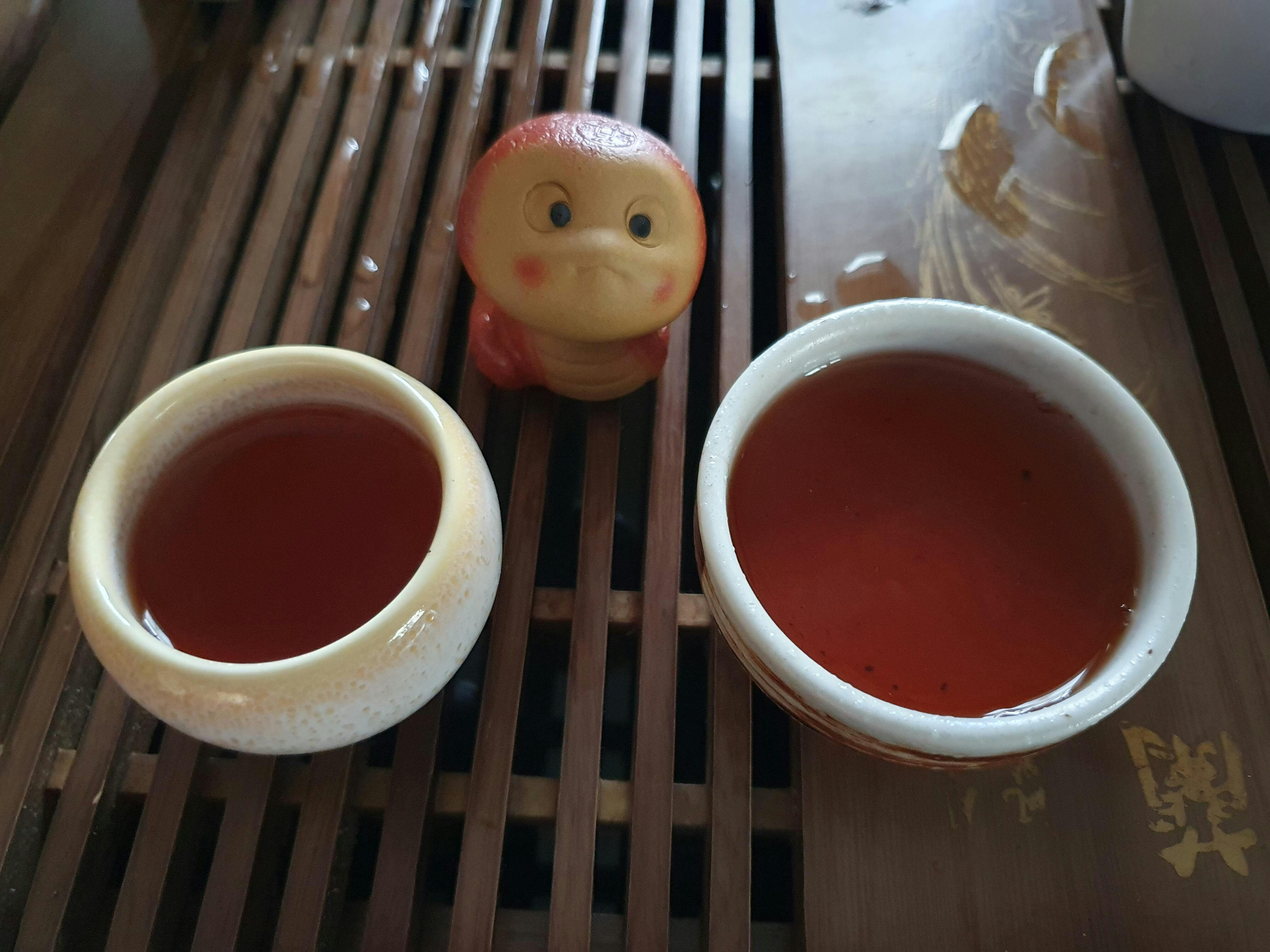
("Ripe" Liubao On the Bottom Right Side from 2023 brews up darker than various raw farmer teas from 2010-2021)
The good news is, most all of these fakes are made in the modern factory style. Few are trying to fake 2021 purple bud or 2019 Laochapo. Here, for me at least, lays the first value in Raw Liubao. While you will probably want to double rinse all of them, you can have for the same price as a standard fake factory Liubao some of the weirdest and most genuinely interesting tea in China. When these teas hit your tongue you may variously think of root beer, mint, ginseng, malt chocolate, and even raspberries. You will seldom encounter the dank dark dungeon Liubao of your nightmares or the warming and sweetly thick ripe tea of the factories. It is a wide spectrum of teas that no other dark tea but Puer can best in scope.
Sources Consulted (Can Share PDFs with Chinese Readers)
Zhuang Wanfang. 1979. The Famous Teas of China. Hangzhou: Zhejiang People’s Press. P. 91-93.
Zhang Qiang, Wanf Qihua, Luo Xiaoli, Zhang Shini, Yang Ta. 2024. “Tea Polyphenol Content and Antioxidant Activity of Liubao Tea from Different Fermentation Years and Aromatic.” Food Research & Development. 45(16).
Xu Hao, Ou Xingchang, Ouyang Jian, Xiao Hongfei, Liu Zhonghua, Huang, Jianan. 2025. “Research Progress on Aroma and Taste Components and Evaluation Methods of Liupao Tea.” Modern Food Science and Technology. 41(1)
Chen Yongbin. 2016. Analysis of the Development of Liupao Tea Industry in Wuzhou. Guangxi University, Master’s Thesis.